
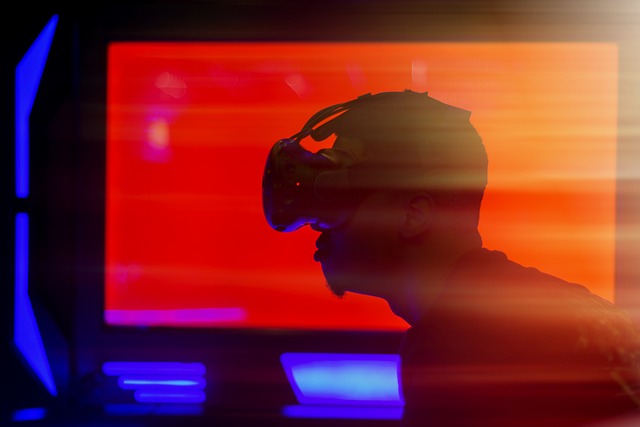
Virtual Reality (VR) is revolutionizing the business world by offering innovative ways to engage with customers, enhance employee training, and improve product development processes. Here are some key areas where VR is making a significant impact in the business realm:
- Training and Education: VR provides an immersive learning environment, making it ideal for training employees. In industries like healthcare, aviation, and manufacturing, VR simulations offer hands-on experience without the risks associated with real-life training. This leads to improved learning outcomes and skill retention.
- Remote Collaboration: With the rise of remote work, VR offers a solution for effective collaboration. Virtual meeting rooms enable participants to interact in a 3D space, making meetings more engaging and productive than traditional video calls. This is especially beneficial for teams spread across different locations.
- Product Design and Prototyping: VR allows designers and engineers to create and test prototypes in a virtual environment. This not only speeds up the development process but also reduces costs by eliminating the need for physical prototypes.
- Customer Experience and Marketing: Businesses are using VR to offer unique customer experiences. For example, real estate companies provide virtual tours of properties, and retailers use VR to allow customers to try products virtually. This immersive technology enhances customer engagement and can lead to increased sales.
- Data Visualization and Analysis: VR provides a novel way to visualize and interact with complex data sets. Businesses can use VR to analyze trends and patterns, making data more accessible and understandable, which is crucial for decision-making.
- Health and Safety Training: VR simulations can replicate dangerous or difficult scenarios for training purposes. This is particularly useful in industries like mining, construction, and emergency services, where practicing in a safe, controlled environment can be life-saving.
- Recruitment and Onboarding: Some companies use VR to give potential employees a virtual tour of their offices and to simulate job tasks during the recruitment process. This innovative approach can enhance the candidate experience and improve the onboarding process.
- Retail and E-commerce: VR is transforming the retail sector by enabling customers to try before they buy. Virtual fitting rooms and product demonstrations offer a new level of interaction, bridging the gap between online and in-store shopping experiences.
- Tourism and Travel: The travel industry is leveraging VR to provide virtual tours of destinations, hotels, and experiences, allowing potential travelers to explore options in a highly immersive way.
- Architectural and Urban Planning: Architects and urban planners use VR to visualize building designs and urban layouts. This aids in better planning, stakeholder communication, and public engagement in developmental projects.
In conclusion, VR’s ability to create immersive, interactive experiences is transforming various aspects of business. From enhancing customer engagement to improving employee training, the potential applications of VR in business are vast and continually evolving. As technology advances, we can expect even more innovative uses of VR in the business world.